
Published: 17 May 2024
"Unity and togetherness"
ZMGM, The Turkish Members society at the ISSMGE has submitted multiple entries for the ISSMGE Time Capsule Project which included a Survey report of its Membership (in Turkish)[1], a poster to present the results, an interview with Prof. Ergün Torol on the historic origination of Geotechnical Engineering from Turkey, reminiscent photographic memories relating to Prof. Karl Terzaghi and a final presentation encompassing all these efforts.
The interview with Prof. Ergün Torol reveals that, Prof. Terzaghi organized the 1st International Conference on Soil Mechanics and Foundation Engineering in Cambridge Massachusetts in 1936. Upon his request in Prof. Huizinga organizer of Rotterdam Conference, wrote to Prof. Peynirciolu and invited him to the Conference. In 1949 Soil Mechanics Research Institute was formed in Istanbul Technical University and Turkish Engineers attended as members of the Turkish Group of Soil Mechanics.
ZMGM has presented the Strength, Opportunities, Weakness and Threats (SWOT) aspect analysis of the current situation of Geotechnical Engineering in Turkey.
Strengths
- Intrinsic Strength of Geotechnical Engineering: The inhomogeneous and inconsistency of the soil makes Geotechnical Engineering a specialized field requiring diverse design to cater structural requirements and geophysical events.
- Strength of ZMGM Community: The benefits of the knowledge from the incipiency of geotechnical engineering from Turkey combined with the unity and struggle of professionals on current issues of importance has lead to the formation of a good community and communication network.
- Strength of Institutions: Significant stakeholder increase, both individuals and institutions
- Strength of Firms: Firms specializing in diverse geotechnical applications, investigations and consultancy both nationally and internationally provide strength to geotechnical engineering.
- Strength of People: Increased number of postgraduates, training and international work experience has allowed an increase in the application of Geotechnical engineering
- Strength of Projects: Increasing investments in mega projects attract diverse special geotechnical problems and applications leading to increased experience and knowledge providing leverage in international competitiveness and expansion of resources available to firms.
- Strength of Software Packages: Open access and use of internationally software in designs.
Weakness
- Impediments in defining Geotechnical Engineering as a Specialization: Geotechnical Engineering remains unknown and unrecognized as a valued profession in Turkey. The importance of expertise is only understood by Chamber of Civil Engineers, and AFAD.
- Weakness of Community: Number of professionally expert members is low.
- Deficiencies in Institutions: Few faculties offer postgraduate degree and a lack of well-trained lecturers and infrastructure have lead to poor knowledge gained from theoretical learning alone with inadequate field experience and laboratory training leading to low quality and limited capacity to compete internationally.
- Weakness of firms: Bid evaluations ignore contingencies that may arise from possible failures and omissions as unqualified firms give precedence to financial gains over engineering standards due to budget cuts and cost of specialized equipment, while others bid unethically on project execution itself.
- Weakness of People: The role of geotechnical engineers remains unknown to many including those working in the field with a few with graduate degrees while new graduates lack sufficient experience.
- Weakness in Project Designing
- Insufficient data for geotechnical terrain characterization: Analysis and designs remain tethered to individual projects due to limited exchange of experience and knowledge and thus further project designs may be based on correlations or assumptions where obtaining data for ground classification is difficult. Further, geotechnical laboratories lack necessary instruments.
- Lack of Quality Controls in Experimental Analysis: Lack of quality control monitoring in experimentation, interpretation and reporting of results remains problematic. Further it remains unclear if design assumptions used are cautious and cannot be evaluated.
- Weakness in Software Use/Numerical Modeling: Lack of numerical and structural modeling skills and knowledge prevents sufficient use of software, data science and digital technologies. When used, the inability to fully interpret results and employing numerical and theoretical modeling accurately at both sample and project levels remains an issue.
Opportunities
- Opportunities for Geotechnical Engineering: Urban transformation and infrastructure development in seismic zones provide opportunities for developing disaster analysis and further innovation in intersecting fields such as climate change.
- Opportunities for ZMGM Community: Research community has opportunities to adapt new avenues in materials, technologies, data processing and artificial intelligence in their application to projects solutions.
- Opportunities for Institutions: Academia and institutions must enrich and expand education by including newer technologies, including but not limited to: Ground improvement methods, soil-structure interaction, environmental geotechnical, modeling, design of high-precision low-cost laboratory devices and artificial intelligence.
- Opportunities for Specialist firms: With increasing diversity of applications, firms have the opportunity to increase their competitiveness and expanding equipment through working on international projects and with international firms.
- Opportunities for Human Resources development: The significant increase in the specializations; young and mid-career academicians provide a tremendous opportunity for development.
Threats
- Threats to Geotechnical Engineering: Importance and essence of specialization remains unrecognized by administration unless a projects requirement. It remains difficult to seek employment only with this profession, while other disciplines have taken over the field.
- Inadequacy of Community narrow perspectives: Resistance to new technologies and approaches (Software / data science / digitalization) coupled with the inability to gain experience. Experts generally reside in major cities which makes employment difficult elsewhere.
- Inadequacy of Institutions
- Lack of Supervisory organization: Lack of registration and inspection standards results in excessive competition leading to drop in quality, professional and engineering ethics as firms cater financial concerns.
- Lack of R&D: Financial resources are limited to Tübitak and geotechnical projects are not assigned sufficient support. Universities fail to compete for opportunities internationally and research remains closed-door and unaligned with market requirement due to the lack of collaboration. Moreover, exchange of information is limited as State or private institutions do not liaise with universities.
- Deficiencies in Education: Missing expertise and competency assessment and requirements of specialized graduate degree poses a threat.
- Threat to Firms: Detrimental tax policies, current economic situation and political problems in neighboring countries pose financial issues where project cost and salaries remain low and pose the possibility of qualified personnel to leave the sector. Furthermore, lack of rules and experience sharing by firms poses additional threats.
- Threats to People: Geological and Geophysics engineers unfairly compete and shrinking the employment pool without sufficient knowledge and further cause damage to the reputation of the field.
- Threats to Technology Adoption: Field studies are overshadowed by excessive use of software packages and a lack of use and trust in the use of software poses a threat to people and firms. Lack of due diligence in determining parameters, errors in laboratory and field tests, sample collection and reporting result in inadequate ground characterization and insufficient data.
The Way Forward
The ZMGM community believes that geotechnical engineering efforts in Turkey need to work on the following questions:
- What measures can be taken to cater for weaknesses and threats before us?
- How our strengths be solidified and opportune environment for the field be developed?
These have been addressed as follows:
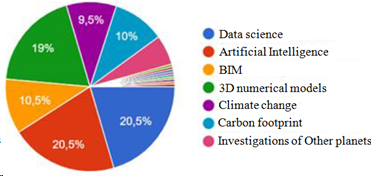
- Increasing R&D and Future Research: The aspirations in working towards newer fields and finding intersecting avenues can be seen from the figure below:
- Expanding Scope of Geotechnical Engineering
- Provision of specialized quota in Public institutions to increase recognition
- Improving financial share of geotechnical engineering in services
- Developing the financial worth at par to the field
- Stipulating specialized graduate or doctorate requirement and preventing other engineers entering
- Mandating dissemination of geotechnical reports prepared by institutes/universities
- Directing Engineers towards Geotechnical Engineering
- Include design-oriented elective courses at Undergraduate level.
- Employ visual aids in achieving learning (videos, experimentations, field trips)
- Introduce significant projects in Turkey and international
- Use case analysis-based seminars
- Organize panels/ Workshops
- Include expert academics as role models
- Discussing current geotechnical issues and application
- Induce collaboration between organizations
- Introduce funds for internships at mega projects to broaden understanding and experience
- Changing perception of geotechnical: Civil engineering is myopically seen as structural engineering alone. Collaboration must be encouraged to ensure students attempt different disciplines and reinforced through displaying exemplary behavior and treating students professionally.
[1] ZMGM presented their input to the ISSMGE Time Capsule Project. This resource is a translation in the words of the author and an attempt to present the views of the Turkish society. The report was available in Turkish and therefore translated into English for preparing this summary. Any inadvertent mistake or omission due to translation is highly regretted.
Categories
Data Management
Keywords
Turkiye, ZMGM, ISSMGE, SWOT