
Published: 22 September 2026
Excess Soils Symposium Toronto 2026 to Bring Soil Management and Industry Innovation into Focus
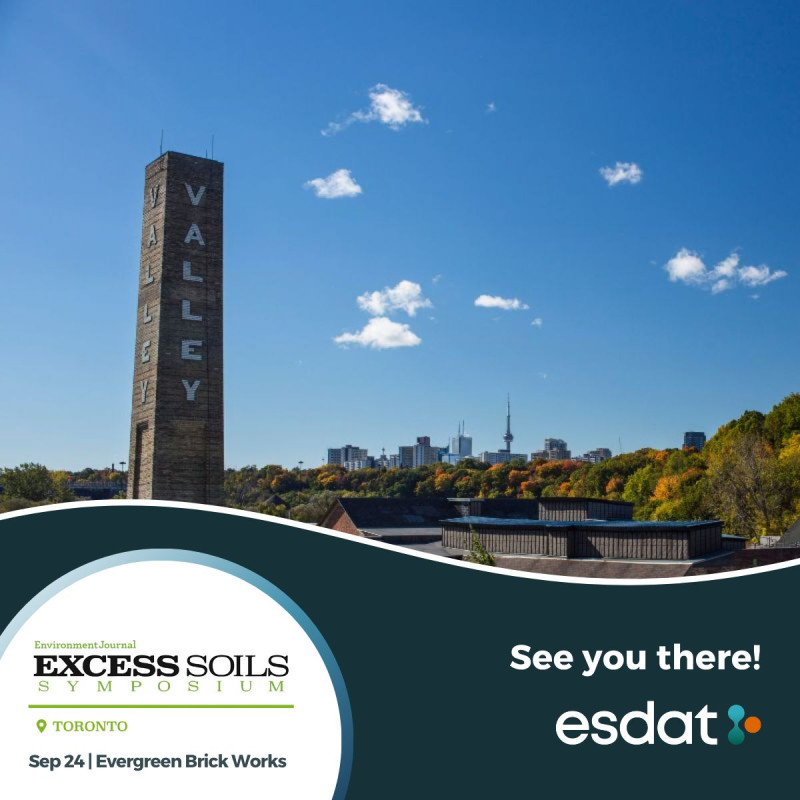
Toronto's excess soils community will gather on Thursday, September 24, for the 10th annual Excess Soils Symposium, hosted by Environment Journal. The event moves to Evergreen Brick Works this year, with a program covering the business of excess soils, regulatory issues affecting construction and cleanup projects, and practical approaches to soil management. Environment Journal's event announcement
Key takeaways
-
When and where: Thursday, September 24, 2026, at Evergreen Brick Works in Toronto.
-
What to expect: Technical presentations, panel discussions, and networking, with subjects ranging from sampling and soil treatment to reuse and digital tools.
-
Who to meet: ESdats Paige Spurgeon and Danielle Conley will attend and welcome conversations with industry colleagues.
A New Setting for the Symposium's 10th Year
Environment Journal says increased demand prompted the move to Evergreen Brick Works. The former industrial site, now an environmental community hub, provides a fitting setting for discussions about land rehabilitation and resource management. The symposium combines technical insights with opportunities to exchange experiences across the industry. Event and venue details
Program Connects Regulatory Questions with Practical Solutions
The published agenda lists an Ontario Ministry of the Environment, Conservation and Parks welcome address by Todd McCarthy, followed by a panel examining nuanced applications of excess soil regulations.
Morning presentations will explore sampling strategies, cross-contamination, and soil management across Canada. Soil washing and lessons from quarry rehabilitation in Québec also feature.
In the afternoon, Jennifer Angel will deliver a keynote on public spaces and urban climate resilience. Other sessions address in-situ soil treatment, bedrock management and ground improvement.
Technology will feature through presentations on GIS tools for identifying municipal reuse sites and the use of AI with safeguards for accuracy and traceability. The program also includes materials management for major infrastructure projects and perspectives from Qualified Persons. View the published agenda
Frequently Asked Questions
When does the day begin and end?
The agenda lists a guided venue tour at 8:00 a.m., breakfast and registration at 8:30 a.m., and welcome remarks at 9:00 a.m. A cocktail reception is scheduled from 5:05 to 6:00 p.m. Check the live agenda for updates.
Who would find the event relevant?
Its subject matter is relevant to environmental consultants, construction teams, developers, soil management operators, municipal staff and technology providers involved in construction, cleanup and soil reuse.
How can people register?
The organizers' Toronto symposium page provides a registration link. Prospective attendees should check the ticketing page for current availability and pricing.
Meet ESdat's Paige Spurgeon and Danielle Conley
ESdat will return to the symposium this year, with Paige Spurgeon and Danielle Conley attending.
The team looks forward to discussing the business of excess soils, emerging industry trends, and new regulations affecting construction and cleanup projects. Attendees are encouraged to find Paige and Danielle, say hello, and connect throughout the day.
About ESdat
ESdat is environmental and groundwater data management software produced by EScIS (EarthScience Information Systems) and used by consulting, industrial, government and mining organisations worldwide.
The software helps scientists and engineers bring together laboratory results, field observations and monitoring data, then analyze and report that information. Features include comparisons against environmental standards, graphs, maps and reporting tools that support understanding of site conditions. Learn more about ESdat
EScIS's vision is to deliver the world's best environmental and groundwater data management system, helping clients work smarter and address their core data challenges so they can make informed decisions and drive meaningful change.
Categories
Data Management
Keywords
Toronto, ESdat, Excess Soils Symposium, Environment Journal