
Published: 31 March 2026
Tunnel engineering is a critical component of infrastructure projects, from urban metro systems to large-scale mining operations. The safety and stability of tunnels largely depend on the quality of the surrounding rock and the choice of appropriate support systems. In this post, I'll provide an overview of common tunnel support types and recommended support combinations based on rock mass quality, using the widely applied RMR (Rock Mass Rating) system.
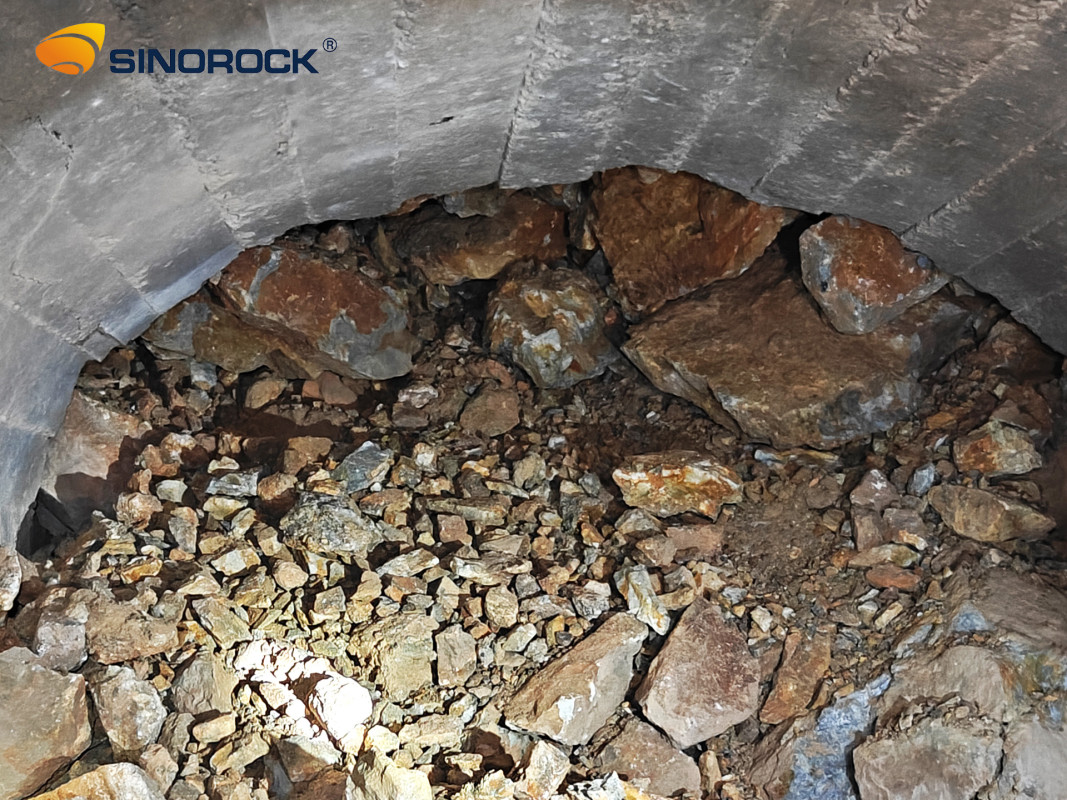
Rock Mass Classification and Support Principles
The surrounding rock mass is typically classified according to the RMR system, which helps engineers determine the necessary support measures for tunnel stability:
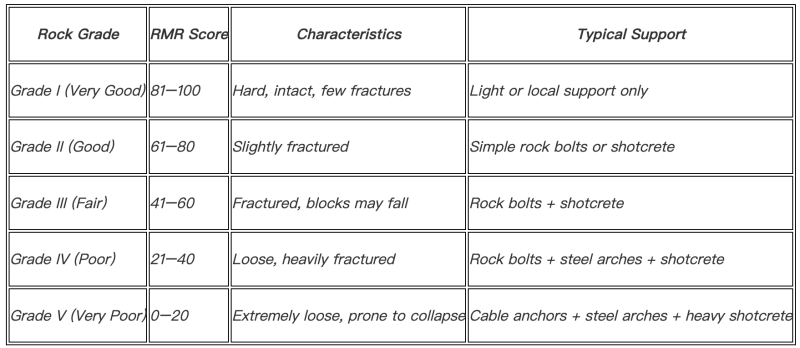
Key Principle: As rock mass quality decreases, the support system must be more robust. Conversely, high-quality rock can often be stabilized with lighter or minimal support.
Common Tunnel Support Types
1. Rock Bolts
Reinforce the surrounding rock and control local displacements
Suitable for medium to slightly fractured rock
Quick installation, often combined with shotcrete or steel frames
2. Shotcrete (Sprayed Concrete)
Provides a continuous protective layer on the rock surface
Prevents small block falls, adapts to irregular surfaces
Often combined with rock bolts or steel arches
3. Steel Arch Support
Provides structural support for large deformations
Suitable for loose or fractured rock and high-stress conditions
Can be combined with shotcrete and cable anchors for comprehensive support
4. Cable Anchors
Long anchors for deep or large rock masses
Ideal for deep tunnels, large cross-sections, or very poor rock
Often used in combination with steel arches and shotcrete
5. Mesh / Lattice Beams
Controls minor rock block falls and distributes local stress
Auxiliary support, generally for medium or better rock
Typically used with shotcrete
Recommended Support Combinations by Rock Grade
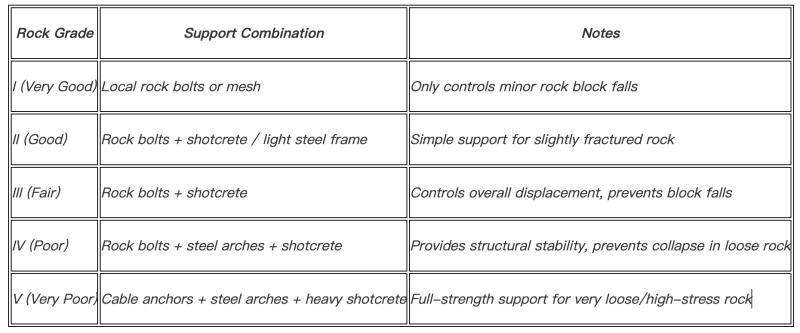
Practical Note: In real-world projects, groundwater conditions, excavation methods, and stress distributions can require adjustments to these support combinations.
Conclusion
Selecting appropriate tunnel support systems is critical for construction safety, operational stability, and long-term service life. Understanding the interaction between rock mass quality and support type allows engineers to design cost-effective, safe, and durable tunnels. Advanced materials and modern support technologies continue to enhance traditional methods, offering more efficient and adaptive solutions in complex geological conditions.
Categories
Tunneling in Rock
Keywords
Tunnels, tunnel support