
Published: 19 March 2026
- Project: Tunxi Riverside Pedestrian Street Redevelopment
- Location: Huangshan, China
- Area: ~36.372 m²
- Structure: 1 basement level + 23 above-ground floors for commercial use
Project Background
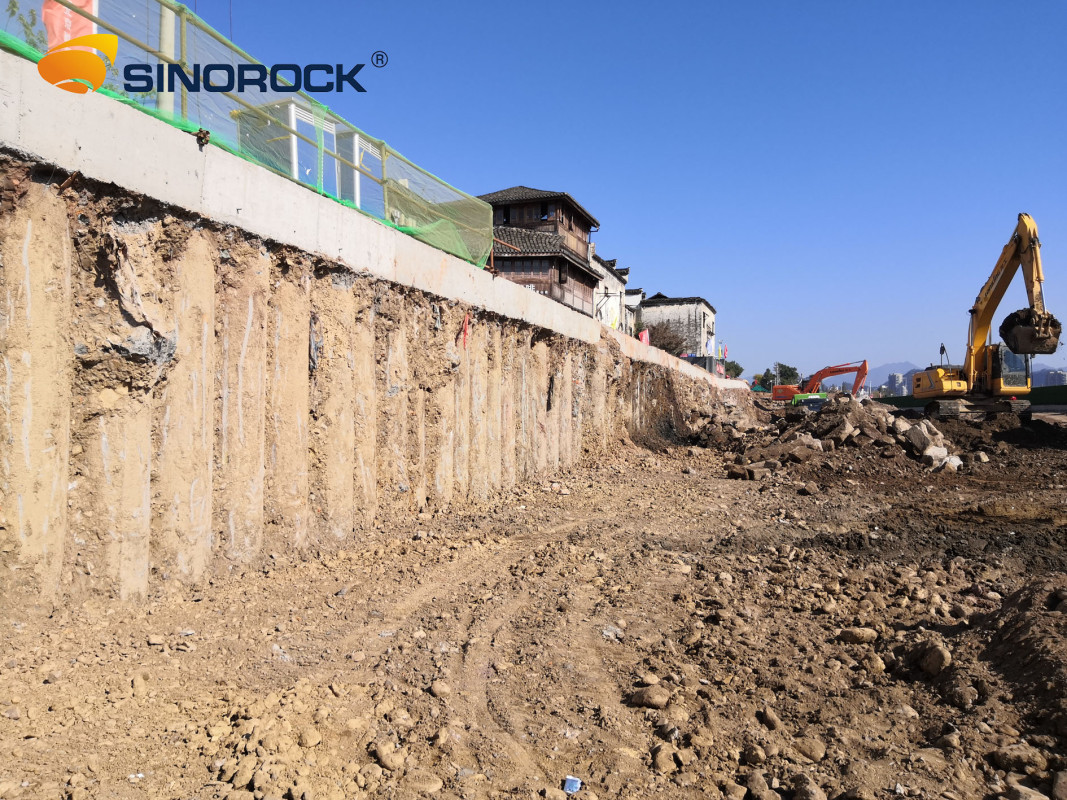 The Tunxi Riverside Pedestrian Street project aimed to revitalize Huangshan's historic district while preserving its cultural heritage. The redevelopment combines modern commercial functionality with careful protection of the historic urban fabric.
The foundation pit for the site required high-quality retaining solutions due to its complex geology, which includes cobble layers, heavily weathered sandstone and slate, and debris-rich strata. Achieving timely construction with minimal environmental and structural impact was a primary challenge.
Engineering Challenges
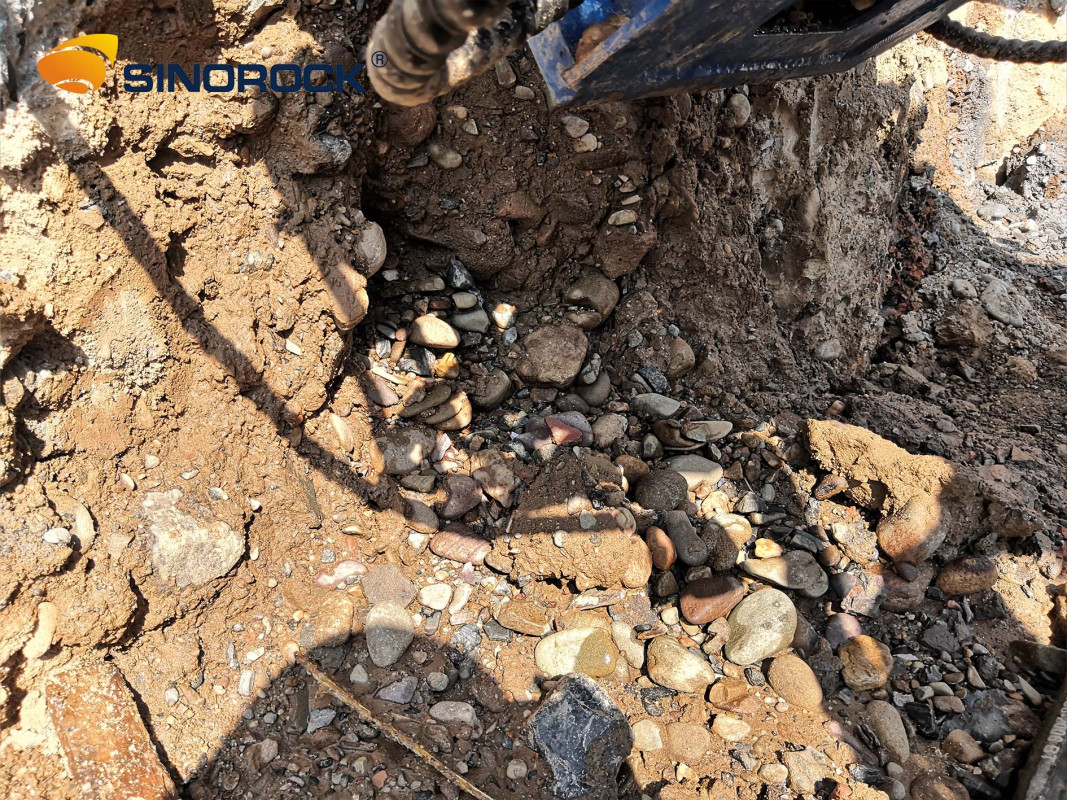 1. Complex Soil Conditions:
- Loose cobble layers and heavily weathered rock were difficult to drill.
- Conventional casing and water-circulation drilling posed high costs, slow progress, and risk of secondary soil disturbance.
2. Time and Cost Constraints:
- Short construction schedule required an efficient retaining method.
- Budget limitations prohibited excessive traditional drilling and grouting steps.
Technical Solution: R38 Self-Drilling Hollow Anchors
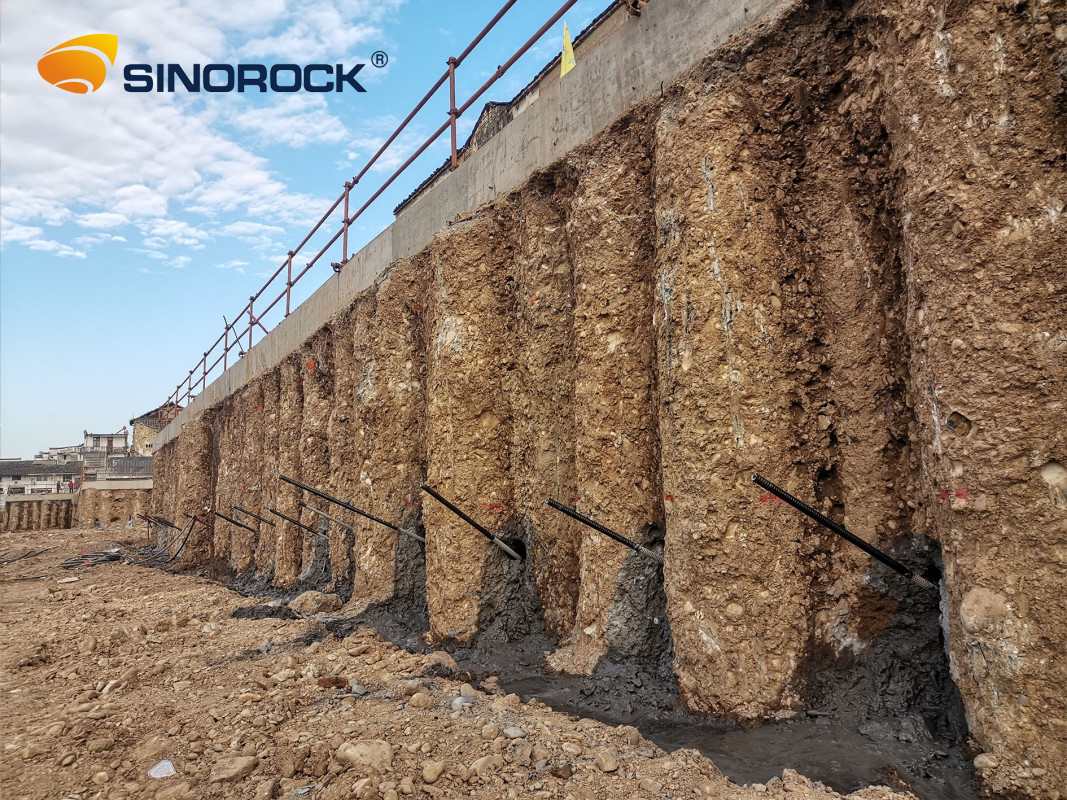 To address the challenges, the project adopted the R38 self-drilling hollow anchor system, which integrates drilling, grouting, and anchoring into a single operation.
Advantages:
- Anchor rods serve as drill rods and permanent reinforcement, eliminating a separate grouting step.
- Simultaneous grouting during drilling improves surrounding soil strength and enhances overall anchoring capacity.
- High construction efficiency with reduced environmental impact.
Technical Specifications:
- Anchor type: SER38/18. 3 m per rod
- Grout: Ordinary cement slurry, water-cement ratio 0.50.55. compressive strength 20 MPa
- Grouting pressure: 0.30.5 MPa
- Pullout test: 15 kN/m, design pullout force 270 kN
Construction Process:
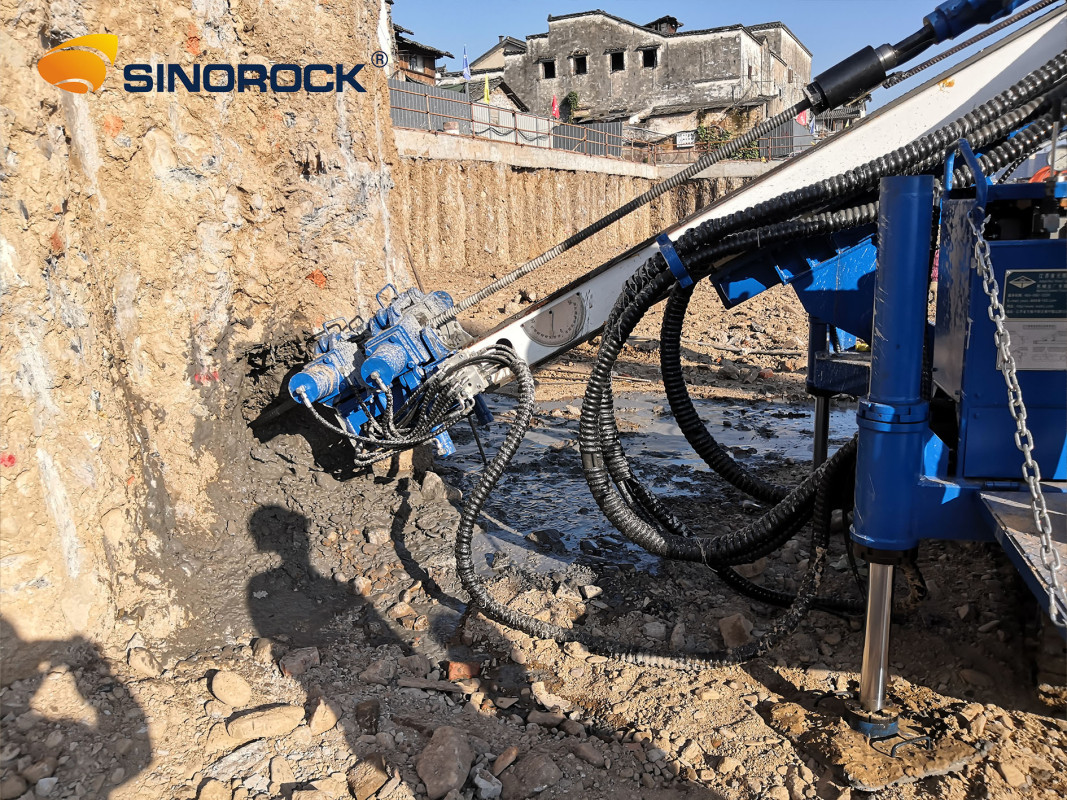
- Site preparation and rig setup
- Anchor installation with simultaneous drilling and grouting
- Layered excavation with repeated drilling & anchoring
- Pullout tests for quality verification
Performance:
- Self-drilling rigs (HYZ133-100A) achieved 14 minutes per 18 m hole, with 300 m+ drilling per 8-hour shift, up to 500 m under optimal conditions.
- Compared with traditional methods, construction efficiency increased over 5×.
Project Outcomes
- Foundation pit support was completed successfully within 2 months.
- High-quality anchors and efficient construction workflow received strong recognition from the contractor.
- Minimal disruption to the historic pedestrian street was achieved.
Conclusion
- Self-drilling hollow anchors are highly effective for urban sites with challenging geology, including cobble-rich and debris-filled strata.
- Combining drilling and grouting significantly reduces construction time and simplifies workflow.
- Field pullout tests are essential to validate anchor performance and design assumptions.
- Planning for complex soil variability and using adaptable anchoring systems are critical for urban redevelopment projects.
Categories
Deep Excavations, Pile Foundations
Keywords
rock bolts, foundation, Geology, Self-Drilling Hollow Anchors