
Published: 31 October 2026
A Self-Drilling Anchor (SDA) System is an integrated ground reinforcement solution designed for drilling, grouting, and anchoring in a single installation process. It is particularly suitable for challenging ground conditions where conventional drilling methods may encounter difficulties, such as loose soil, fractured rock, weathered formations, and unstable ground.
Unlike conventional anchor systems that require a separate drilling operation followed by the insertion of an anchor bar, a self-drilling anchor uses a hollow threaded steel bar as both the drilling rod and the permanent reinforcing element. A sacrificial drill bit is attached to the front end, while grout can be delivered through the hollow core of the bar during or after drilling, depending on the installation method.
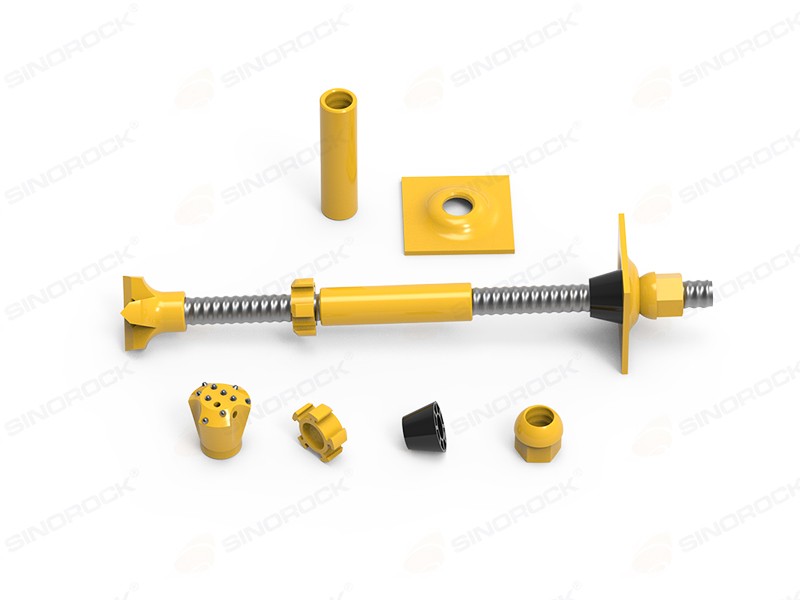
A complete self-drilling anchor system consists of six primary components:
-
Drill Bit
-
Hollow Bar
-
Coupler
-
Centralizer
-
Anchor Plate
-
Anchor Nut
Each component serves a specific function, and their compatibility is essential to achieving reliable load transfer, effective grouting, and long-term anchoring performance.
Understanding the structure and function of these components helps engineers, contractors, and material suppliers select the appropriate anchoring system for different ground conditions and engineering requirements.
1. Drill Bit: Creating the Borehole
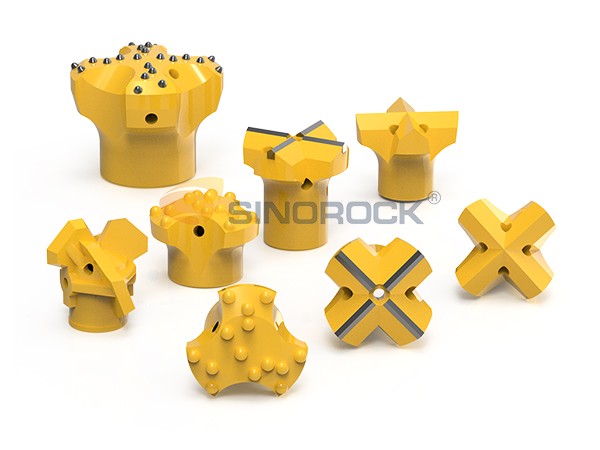
The drill bit is installed at the leading end of the hollow bar and is responsible for cutting through the ground to create the required borehole.
Unlike conventional drilling bits that are retrieved after drilling, a self-drilling anchor typically uses a sacrificial drill bit. The bit remains at the bottom of the borehole after installation and becomes part of the completed anchoring system.
The drill bit also provides a passage for flushing or drilling grout through its discharge openings, helping remove drilling debris and facilitating grout distribution.
Common Types of Self-Drilling Anchor Drill Bits
Different drill bit designs are available to accommodate varying geological conditions, drilling requirements, and borehole diameters.
Cross Bits
Cross bits feature cutting blades arranged in a cross-shaped configuration. They are commonly available in all-steel and tungsten carbide insert versions.
-
All-Steel Cross Bit: A practical option for relatively soft or less abrasive ground conditions.
-
Tungsten Carbide Cross Bit (TC Cross Bit): Equipped with carbide cutting elements for improved wear resistance and drilling performance in harder or more abrasive formations.
Button Bits
Button bits use rounded cutting elements distributed across the drilling face. They are available in all-steel and tungsten carbide insert configurations.
-
All-Steel Button Bit: Designed for selected ground conditions where an economical drilling solution is required.
-
Tungsten Carbide Button Bit (TC Button Bit): Suitable for more demanding drilling conditions requiring enhanced cutting durability.
Clay Bits
Clay bits are designed for drilling in cohesive soils and clay formations. Their cutting structure helps facilitate penetration and the removal of drilling material in suitable ground conditions.
How to Select the Right Drill Bit
Drill bit selection should consider several factors:
-
Ground and geological conditions.
-
Required borehole diameter.
-
Hollow bar diameter and system configuration.
-
Drilling equipment and flushing method.
-
Required drilling efficiency and service life.
Selecting the correct drill bit helps improve drilling efficiency, reduce premature bit wear, and achieve the required borehole dimensions.
2. Hollow Bar: The Core Structural Component
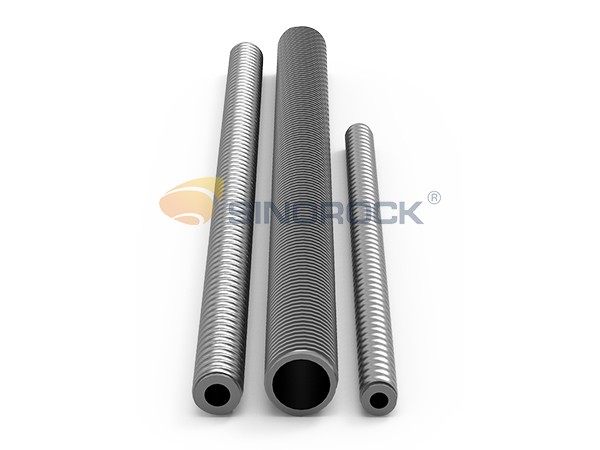
The hollow bar is the central component of a self-drilling anchor system. It combines the functions of a conventional drilling rod and a permanent anchor element.
Manufactured from hollow steel tubing, the bar features continuous external threading along its entire length. This threaded profile allows it to connect with compatible accessories, including drill bits, couplers, anchor nuts, and other system components.
Key Functions of a Hollow Bar
1. Drilling Function
During installation, the hollow bar acts as the drill rod, transmitting rotational and, where applicable, percussive energy from the drilling equipment to the drill bit.
2. Grouting Function
The hollow core provides an internal passage for flushing media during drilling and grout injection during the anchoring process. Depending on the installation procedure, grouting can be performed simultaneously with drilling or as a subsequent operation.
3. Structural Reinforcement Function
After installation and grouting, the hollow bar remains permanently in the ground and acts as the primary reinforcing element. It transfers tensile or compressive forces within the anchoring system according to the engineering design.
R-Thread and T-Thread Systems
Self-drilling hollow bars are commonly available in two major thread configurations: R-thread and T-thread.
-
R-Thread: A widely used rope-thread configuration for self-drilling anchor applications.
-
T-Thread: A trapezoidal thread configuration commonly used in larger or higher-capacity anchoring systems.
Both configurations feature continuous external threading, allowing flexible cutting, extension, and connection with compatible accessories.
However, R-thread and T-thread components are not interchangeable unless specifically designed and verified for compatibility.
Material and Surface Protection Options
Hollow bars are available in different steel grades and material configurations to meet varying mechanical performance and environmental requirements.
Material selection should consider:
-
Required tensile and yield strength.
-
Drilling and installation loads.
-
Ground conditions and corrosion exposure.
-
Project design life.
-
Applicable technical specifications.
For projects requiring enhanced corrosion resistance, protective finishes such as hot-dip galvanizing, epoxy coating, or dual-coating systems may be considered, depending on the project requirements.
3. Coupler Connecting and Extending Hollow Bars
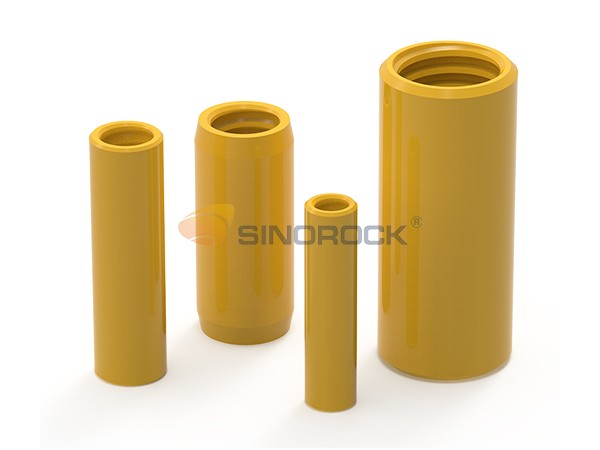
A coupler, also known as an extension coupling, is used to connect two hollow bar sections and extend the overall anchoring length.
It is particularly important in projects where the required anchor length exceeds the available length of a single hollow bar or the drilling capacity of the equipment.
Main Functions of a Coupler
1. Connecting Hollow Bars
The coupler connects two threaded hollow bars through their external threads, creating a continuous anchoring assembly.
2. Transferring Mechanical Loads
During drilling, the coupler transmits rotational and, where applicable, percussive energy between connected bar sections.
After installation, it must also provide the required load-transfer capacity across the connection.
3. Extending Anchor Length
By connecting multiple hollow bar sections, contractors can achieve the required anchoring depth without relying on a single long bar.
Why Coupler Strength Matters
The coupler connection can become a critical point in the overall anchoring assembly if its mechanical performance is insufficient.
For this reason, coupler strength should be verified against the requirements of the corresponding hollow bar system.
At Sinorock, couplers of different specifications undergo tensile testing to verify the mechanical performance of the assembled connection. The target is to ensure that the connected assembly meets the specified strength requirements of the corresponding hollow bar.
Batch inspection and quality control are also important for maintaining consistent product performance.
When selecting a coupler, engineers and material suppliers should verify:
-
Compatible thread type and dimensions.
-
Connection length and thread engagement.
-
Tensile load requirements.
-
Mechanical performance of the complete connection.
4. Centralizer: Maintaining the Position of the Hollow Bar
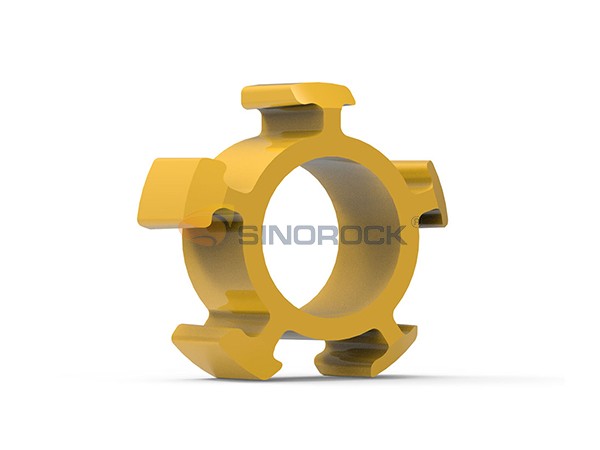
A centralizer is an accessory installed on the hollow bar to help maintain its position near the center of the borehole.
Proper positioning is important because it helps create a more consistent grout cover around the anchor bar, supporting effective grouting and corrosion protection.
Main Functions of a Centralizer
1. Maintaining Bar Alignment
The centralizer helps prevent the hollow bar from resting directly against the borehole wall, keeping it properly positioned during installation.
2. Supporting Uniform Grout Coverage
By maintaining an appropriate distance between the bar and the borehole wall, the centralizer helps provide a more consistent grout cover around the steel bar.
3. Improving Installation Quality
Proper positioning contributes to more reliable grout distribution and helps reduce the risk of direct contact between the hollow bar and the surrounding ground.
Centralizer Selection
Centralizer dimensions should be selected according to:
-
Hollow bar diameter.
-
Borehole diameter.
-
Required grout cover.
-
Ground conditions.
-
Project-specific installation requirements.
The number and spacing of centralizers should also be determined according to the anchor configuration and installation design.
5. Anchor Plate Distributing the Anchoring Load
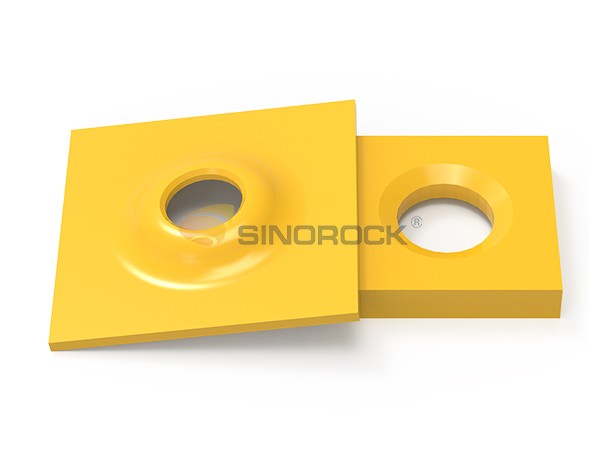
The anchor plate, also known as a bearing plate, is installed at the exposed end of the hollow bar, between the anchor nut and the supporting ground surface.
Its primary function is to distribute the force transferred through the hollow bar over a larger bearing area, helping prevent excessive localized stress at the anchor head.
Main Functions of an Anchor Plate
1. Load Distribution
The anchor plate transfers the load from the hollow bar and anchor nut to the surrounding ground or structural surface.
2. Surface Support
It provides a stable bearing surface for the anchor head assembly and helps maintain the intended anchoring configuration.
3. Compatibility with Different Applications
Different plate shapes and dimensions are available to accommodate varying installation conditions and engineering requirements.
Common Types of Anchor Plates
Domed Plate
A domed plate features a raised or curved central section. It can accommodate certain angular differences between the anchor bar and the supporting surface when used with a compatible nut arrangement.
Domed plates are commonly used in soil nailing and ground stabilization applications.
Flat Plate
A flat plate features a relatively flat bearing surface and is used where the anchor head is designed to bear against a relatively even surface.
Flat plates are commonly used in micropile and other foundation-related applications, subject to the structural design.
How to Select an Anchor Plate
Important selection factors include:
-
Plate dimensions and thickness.
-
Required bearing capacity.
-
Hollow bar diameter.
-
Surface conditions and installation angle.
-
Compatibility with the anchor nut.
-
Project-specific load requirements.
The plate must have sufficient strength and bearing area to safely transfer the design load.
6. Anchor Nut Securing the Anchor Assembly
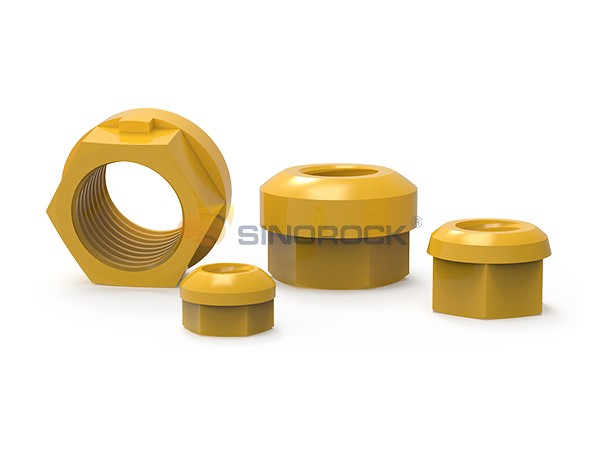
The anchor nut is installed at the exposed threaded end of the hollow bar and works together with the anchor plate to secure the anchoring assembly.
It transfers the load from the hollow bar to the anchor plate and helps hold the plate firmly against the supporting surface.
Main Functions of an Anchor Nut
1. Load Transfer
The anchor nut transfers the force carried by the hollow bar to the bearing plate.
2. Securing the Anchor Head
When tightened, the nut holds the anchor plate in position and completes the surface anchoring assembly.
3. Accommodating Angular Differences
Certain anchor nuts feature a curved or spherical bearing surface. This design allows the nut to maintain better contact with a compatible plate when there is a slight angular difference between the anchor bar and the bearing surface.
For applications involving larger angular deviations, a spherical nut or an additional spherical washer may be considered, depending on the anchor head configuration.
Common Types of Anchor Nuts
Hexagonal Nut
A standard hexagonal nut is commonly used with flat or compatible domed anchor plates. Its internal thread must match the hollow bar specification.
Domed Nut / Spherical Nut
These nuts feature a curved bearing surface designed to accommodate angular differences between the anchor bar and the plate.
The appropriate nut type should be selected according to the plate geometry, installation angle, and required load-transfer conditions.
How the Six Components Work Together
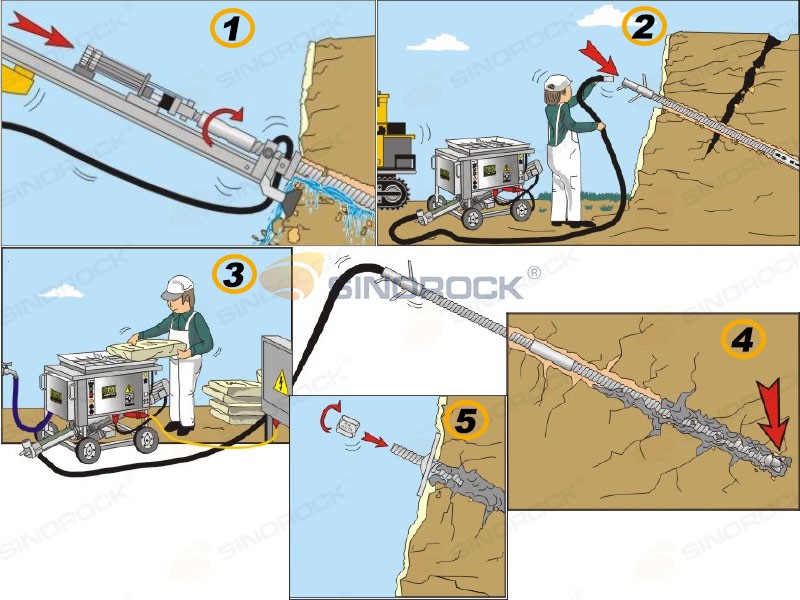
A self-drilling anchor system achieves its performance through the coordinated operation of all six components.
During installation, the drill bit cuts through the ground while the hollow bar transmits drilling energy. The hollow bar can also serve as the passage for flushing media and grout.
When greater anchoring depth is required, couplers connect additional hollow bar sections. Centralizers help maintain the bar position within the borehole, supporting appropriate grout coverage.
After the required installation depth is reached, grouting is completed according to the specified construction procedure. The grout bonds the hollow bar to the surrounding ground.
At the exposed end, the anchor plate and anchor nut form the anchor head assembly. Together, they transfer and distribute the anchoring force to the supporting surface.
Each component must be compatible with the selected hollow bar system to ensure reliable installation and mechanical performance.
Why Component Compatibility Matters
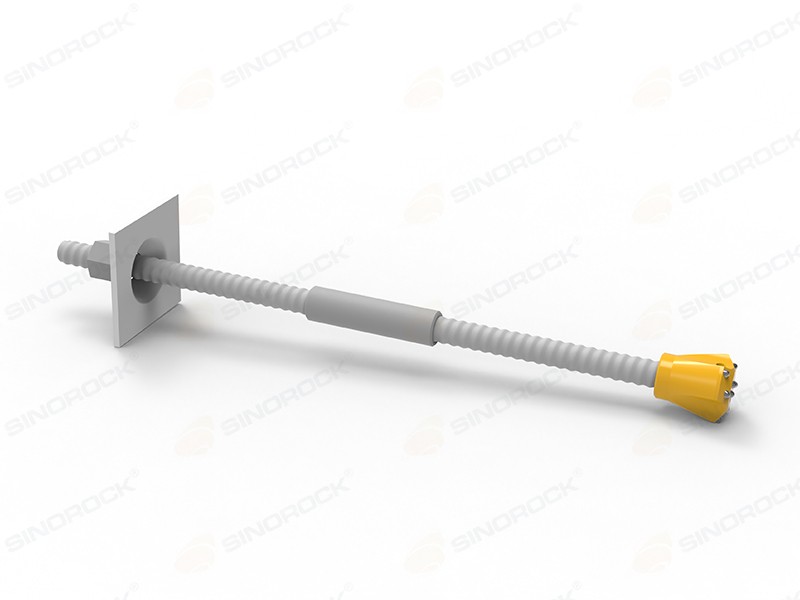
A self-drilling anchor is not simply a collection of individual steel products. It is an integrated anchoring system in which every component contributes to the overall performance.
Using incompatible components may lead to connection problems, inadequate load transfer, installation difficulties, or reduced anchoring reliability.
Before selecting or purchasing a complete system, it is important to verify:
-
Thread compatibility between hollow bars and accessories.
-
Mechanical strength of bars, couplers, nuts, and plates.
-
Drill bit design and diameter for the intended ground conditions.
-
Centralizer dimensions and required grout cover.
-
Corrosion protection requirements.
-
Compatibility with drilling equipment and installation procedures.
For material distributors and project suppliers, sourcing matched components from a qualified manufacturer can help simplify procurement, maintain product consistency, and reduce compatibility risks on site.
Conclusion
The six primary components of a self-drilling anchor system drill bits, hollow bars, couplers, centralizers, anchor plates, and anchor nuts work together to provide an integrated solution for ground reinforcement and foundation applications.
From borehole formation and grout delivery to mechanical load transfer and surface anchoring, each component plays an essential role in the installation process and final system performance.
Selecting the right components and ensuring their compatibility are fundamental to achieving reliable anchoring results across different geological conditions and engineering applications.
With over 20 years of experience in self-drilling anchor manufacturing, Sinorock provides a comprehensive range of hollow bars and matching accessories, covering R-thread and T-thread systems from R22 to R51 and T30 to T200.
As a manufacturer focused on self-drilling anchor systems, Sinorock is committed to providing consistent product quality, reliable mechanical performance, and dependable supply support for global distributors and engineering material suppliers.
Looking for compatible self-drilling anchor components for your next project? Contact Sinorock to discuss your product specifications and requirements.
Categories
Retaining Walls, Pile Foundations, Stabilization, Slope Stabilization
Keywords
Self-Drilling Anchor Components, Hollow Bar Anchor System, Self-Drilling Anchor Accessories