
Published: 29 July 2020
PFAS is an abbreviation for per- and poly-fluoroalkyl substances. These are manufactured chemicals that have been used for more than 50 years. PFAS make products non-stick, water repellent, and fire, weather and stain-resistant. PFAS have been used in a range of consumer products, such as carpets, clothes and paper, and have also been used in firefighting foams, pesticides and stain repellents. PFASs are considered a problem because they contain components such as PFOS, PFOA, and PFHxS, which are highly persistent and are linked to adverse impacts on some plants and animals.
Why PFAS NEMP Monitoring?
Environmental monitoring is important as it helps to determine if PFAS are present within an area of interest and to provide quantitative and qualitative data about the distribution, concentrations and types of PFAS within this area.
Who uses PFAS NEMP Monitoring?
The data gathered through environmental monitoring can then be used by site managers and environmental regulators to inform the assessment and management of PFAS contamination for the protection of human health and the environment. Additionally, environmental monitoring makes available to environmental regulators evidence base for decision-making in relation to policy development, regulatory activities and site-specific management controls, such as whether the PFAS concentration in water meets water quality guidelines or license discharge limits.
Planning and design of monitoring programs.
For any monitoring program to be well established, it should stipulate its specific objectives and the expected uses of the data being collected. There are two types of monitoring programs namely;
- Ambient monitoring programs. These are programs implemented by environmental regulators or by other organizations with interest in the area. These programs provide data to assess the distribution, concentrations and types of PFAS attributed to a range of sources within a region, such as a catchment, urban area or jurisdiction. The programs also incorporate reference site characterization.
- Site-specific monitoring programs. Site-specific programs are activated by legacy contamination or by an incident, such as a loss of containment of PFAS-containment material. These monitoring programs provide data to assess the distribution, concentrations and types, of PFAS attributed to a source or sources at a specific site. It also includes the extent of offsite contamination caused or contributed to by contamination at the site, and the potential on- and offsite impacts on human health and the environment.
When designing monitoring programs, the likelihood of multiple PFAS sources within the same catchment, including point and diffuse sources should be taken into consideration. To meet these expectations, the data collected should at a minimum satisfy the following conditions;
- Characterize the nature of PFAS that may be present
- Map the distribution and spatial extent of PFAS in the area of interest
- Characterize likely temporal variations associated with environmental patterns, including seasonal and intermittent weather variations
- Inform the development of a catchment model or conceptual site model identifying transport, fate and exposure pathways
- Enable comparison against all relevant screening criteria
- Characterize the extent of any adverse impacts on the environment or human health
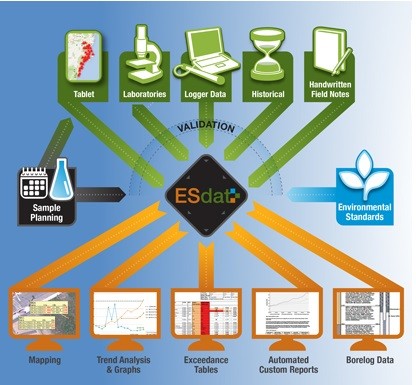
For more information on PFAS NEMP (PFAS National Environment Management Plan 2.0), you can use the fantastic resource available on the environmental standards page of the esdat.net website to search and use environmental standards and guidelines. Environmental Standards are available for air, water and soil for the United States, Canada, Australia, New Zealand, United Kingdom, Holland and from the World Health Organization.
Categories
Instrumentation
Keywords
Environmental Guidelines, Environmetal Standards, Data Management, Environmental Database, Environmental Software, environmental monitoring